
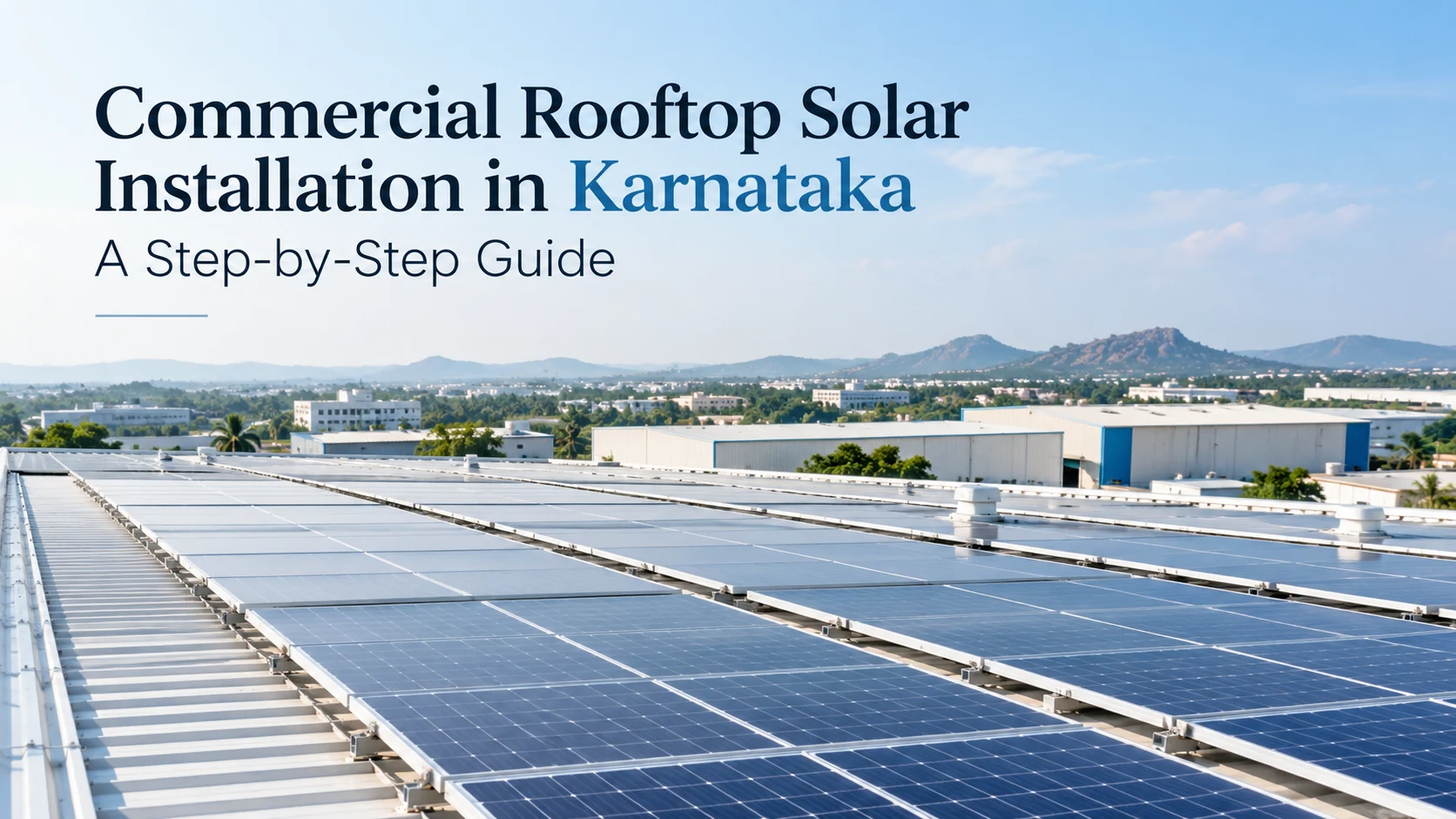
A commercial solar installation in Karnataka follows seven steps: an energy audit, a roof and structure check, system design, choosing CAPEX or OPEX, DISCOM approval, installation, and inspection and commissioning. Under the KERC 2026 process cited in the source, systems up to 150 kW can begin work once the online application is filed.
Most rooftop delays begin before the first panel is fixed: incorrect sizing, a weak or unsuitable roof, or paperwork that stalls. This guide walks through each stage so you know what to expect and what to ask your installer.
Panchami Global is a solar company in Karnataka that designs and installs commercial rooftop solar for factories, warehouses, hotels and offices.
The Solar Panel Installation Process at a Glance
- Energy audit and bill review
- Roof and structure check
- System design
- Choosing CAPEX or OPEX
- DISCOM application and approval
- Installation
- Inspection, net meter and commissioning
The first four steps decide whether the project makes financial and technical sense. The final three determine how smoothly it reaches commissioning.
Step 1: Energy Audit and Bill Review
Every commercial solar installation starts with your electricity bills, not your roof. Your installer should study at least 12 months of bills, your sanctioned load and how much power you use during daylight hours. Rooftop solar only produces during the day, so businesses with strong daytime consumption usually make better use of the generation.
KERC's Grid Interactive Distributed Solar PV Plants Regulations, 2026, as cited in the source, opened net metering to all consumer categories and allow systems up to 1,000 kW. As a rough production guide, rooftop solar in India can generate about 100 to 140 units per kW per month, depending on location and season.
Step 2: Roof and Structure Check
Your roof has to carry the system safely for decades, so inspect the roof before finalising the design. A common planning figure is about 10 square metres, or 100 square feet, of shadow-free area per kW. Water tanks, staircases, parapets and skylights reduce the usable space.
A structural engineer should confirm that the roof can safely take the additional load. On metal shed roofs, the source cites about 12 to 18 kg per square metre for panels and mounting structure, plus localised fixing loads. If the roof is old or leaking, repair it before installing solar.
Step 3: System Design
The design converts the bill study and roof survey into a working system: number of panels, inverter selection, cable routes, protection equipment and connection to the building's electrical panel. A good design also includes a shading study so local obstructions do not unnecessarily reduce output.
Check that the proposed modules comply with the applicable MNRE ALMM requirements. The source also notes that ALMM List-II requirements affect the solar cells used in relevant projects after the stated exemption period. Earthing and lightning protection should be shown in the drawings, not added as an afterthought.
For panel selection, compare the exact ALMM-approved models rather than choosing on brand name alone. See our guide to the best solar panel brands in India for commercial projects.
Step 4: Choosing CAPEX or OPEX
You can fund the system yourself or let a solar developer fund it. Under CAPEX, your business buys and owns the plant and retains the savings. Under OPEX, the developer invests in the system and the customer pays an agreed rate for the solar power produced.
For CAPEX, the source cites 2026 industry estimates of roughly ₹38 to ₹45 per watt for a 100 kW commercial system, with larger systems often costing less per watt. Panchami's commercial rooftop solar supports both CAPEX and OPEX structures.
Step 5: DISCOM Application and Approval
The approval path depends on system size. Under the KERC 2026 process cited in the source:
| System size | What happens |
|---|---|
| Up to 150 kW | Filing the online application counts as approval to begin work. |
| 150 kW to 1,000 kW | Site verification and a Letter of Approval are required before proceeding. |
Your installer should file and track the application with the relevant DISCOM, whether that is BESCOM, CESC, HESCOM, MESCOM or GESCOM.
Step 6: Installation
Installation covers mounting structures, panels, inverters, DC and AC cabling, earthing and the connection to your electrical system. A good installer plans the work around business operations so that roof access and electrical shutdowns are controlled.
Ask who supervises work-at-height safety, how roof penetrations will be waterproofed, and where the inverters will be placed so they remain ventilated and accessible for service.
Step 7: Inspection, Net Meter and Commissioning
Once installation is complete, the installer submits the completion documentation to the DISCOM. The source states that under the cited KERC 2026 process, the DISCOM must inspect and commission the plant within five working days of receiving the completion report. The net meter is installed during the commissioning process where applicable.
At handover, you should receive the as-built drawings, module and inverter warranty documents, monitoring access and the maintenance schedule.
After Commissioning: Keeping the System Productive
A rooftop system needs light but consistent maintenance. Dust reduces output, so cleaning frequency should reflect local conditions. Watch daily generation in the monitoring portal: sudden changes can indicate inverter faults, new shading or soiling. Under an OPEX agreement, operations and maintenance are normally defined in the contract.
Frequently Asked Questions
How long does a commercial solar installation take in Karnataka?
The approval part can be relatively quick under the KERC 2026 process cited in this guide. Systems up to 150 kW can begin work once the online application is filed, while larger systems need additional approval steps. Actual installation time depends on system size, roof type, equipment availability and site conditions.
How much roof space does a commercial rooftop solar system need?
A rough planning figure is about 100 square feet, or 10 square metres, of shadow-free roof per kW. A 100 kW system therefore needs roughly 10,000 square feet before allowing for water tanks, walkways, staircases and other obstructions.
What does commercial rooftop solar cost in Karnataka?
The 2026 industry estimate cited in the source puts a 100 kW commercial system at roughly ₹38 to ₹45 per watt. Larger systems may cost less per watt. Under OPEX, the developer funds the system and the customer pays for generated solar power instead of buying the plant upfront.
Do I need BESCOM approval for rooftop solar?
Yes. Every grid-connected rooftop system goes through the applicable DISCOM, such as BESCOM, CESC, HESCOM, MESCOM or GESCOM. The exact approval steps depend on the project size and current regulations.
Can solar panels be installed on a metal shed roof?
Yes. Metal shed roofs are common on factories and warehouses, but a structural engineer should confirm that the roof and fixing points can safely take the additional solar and mounting loads before installation begins.
The Bottom Line
A commercial rooftop solar installation in Karnataka is much easier to manage when the early decisions are right: accurate system sizing, a structurally suitable roof, a good design, the correct ownership model and properly managed approvals.
If you are comparing solar companies in Karnataka for the job, read our guide on how to choose the right solar company in Karnataka.
Planning Commercial Rooftop Solar?
Bring your last 12 months of electricity bills and basic roof details. Panchami Global can assess the likely system size, roof suitability and whether CAPEX or OPEX is the better fit for your business.